
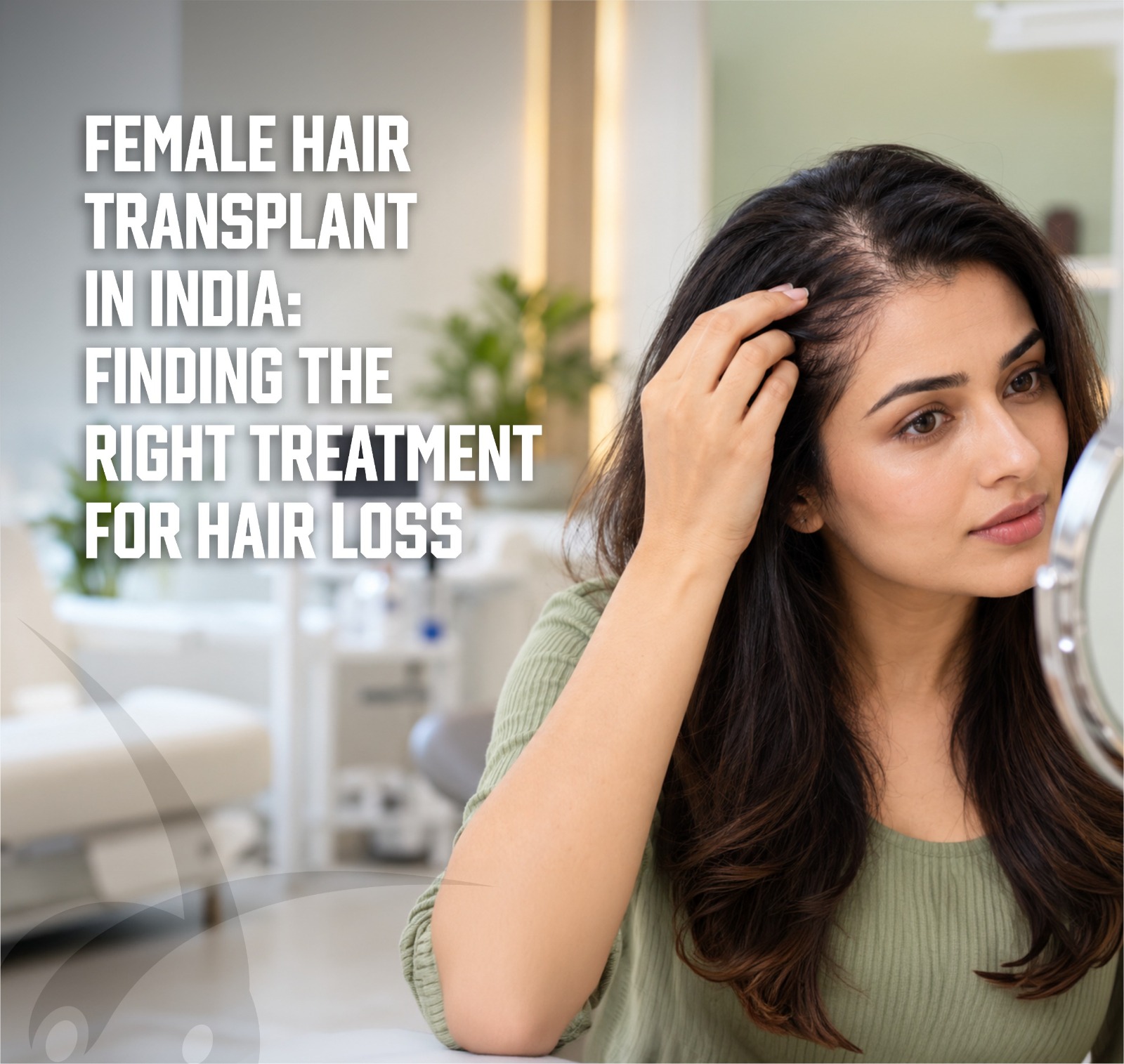
At first, a more widespread parting might easily be dismissed. All you have to do is change your style or use a bit more product. However, when the thinning continues, it’s natural to wonder what is going on and whether the lost hair can come back. In your search for hair transplant options in India for women, you might end up considering surgery, even though the appropriate treatment will depend on the cause of the hair loss.
An online search for “hair transplant Punjab” may lead you to Recover Hair Transplant Centre in Morinda. The centre offers FUE hair transplantation alongside non-surgical options such as PRP and GFC. By considering the pattern of hair loss, scalp condition, and available donor hair, the centre helps women explore their options and set realistic expectations for treatment as discussed in this post.
Why Do Women Experience Hair Loss?
Hair loss in women can be caused by genetic factors, fluctuations in hormones, deficiencies in nutrients or certain medical conditions; furthermore, childbirth, illness and long-term stress can all lead to increased shedding.
Before talking about hair restoration, Recover Hair Transplant Centre examines the areas and manner in which the hair is thinning. The treatment needed for a widening parting may differ from that needed for a well-defined patch of hair loss. If symptoms suggest an underlying illness, obtain a medical diagnosis before any procedure.
- • Hereditary hair thinning tends to develop gradually.
- • Hormonal changes might be due to thyroid disorders or menopause.
- • Shedding can be caused by iron deficiency or by illness.
- • Frequent pulling can damage the follicles.
Who is suitable for a transplant?
Healthy follicles are transplanted into the areas where the hair is thinning. This procedure, however, is only effective if there is a sufficient amount of suitable donor hair, typically found at the back of the scalp.
Recover Hair Transplant Centre looks at scalp health, the availability of donor hair and whether hair loss has stopped. In women who are experiencing thinning all over the scalp, there may not be enough strong donor hair for the procedure, in which case medical management would be a more suitable first step.
- • There is a stable pattern involving a rapidly changing loss that needs to be investigated.
- • We need a supply of healthy follicles.
- • Scalp health: Active problems may need treatment first.
- • Expecting a full restoration of previous density may be unrealistic.
How Does FUE Hair Restoration Work?
FUE removes individual follicular units and places them in selected thinning areas. It is a surgical procedure usually performed under local anaesthesia.
For women, Recover Hair Transplant Centre uses FUE to plan density around the parting and natural hair direction. The consultation should also cover shaving, graft numbers, risks and aftercare. Transplanted hairs may shed before new growth becomes visible over the following months.
- • Assessment: The required coverage is mapped.
- • Extraction: Suitable follicles are removed individually.
- • Placement: Grafts follow the natural growth pattern.
- • Aftercare: Instructions guide early healing.
Are Non-Surgical Options Worth Considering?
Some causes of shedding improve once they are treated. For female pattern hair loss, a dermatologist may recommend medication before considering surgery.
Recover Hair Transplant Centre also lists PRP and GFC, treatments prepared from a patient’s own blood. Discuss their benefits and limitations individually. Options such as topical minoxidil may help certain patients, depending on diagnosis and medical advice.
- • Diagnosis first: Treat any underlying health issue.
- • Medication: Ask about evidence and side effects.
- • PRP or GFC: Discuss suitability and expected benefits.
- • Follow-up: Review progress before changing plans.
Making a Choice That Suits Your Hair
Women lose hair for many reasons, so it’s important to understand what’s happening on the scalp first. While surgery can help restore coverage in certain areas, the amount of donor hair available, the pattern of hair loss, and likely future changes all affect the decision. When preparing a realistic plan, it is necessary to consider how much improvement can be achieved, what the recovery process will be like, and whether continued treatment might be required.
At Recover Hair Transplant Centre in Morinda, women can explore FUE hair transplantation alongside non-surgical options such as PRP and GFC. The centre helps patients understand the available treatments and what may work best for their concerns. If you are considering hair transplant services in Punjab, contact Recover Hair Transplant Centre to book a consultation and take the next step toward addressing your hair loss.
FAQs
1. Is it possible for women suffering from PCOS to have a hair transplant?
Yes, but PCOS-related hair loss should be assessed and managed first. A specialist needs to check whether thinning is stable and whether enough healthy donor hair is available before recommending surgery.
2. How long before women notice results from a hair transplant?
Transplanted hairs commonly shed during the first few weeks. Visible improvement often takes six to nine months, and some patients need around 12 months to see the fuller result. Timelines vary.
3. Is it necessary to shave your head for a FUE hair transplant?
No, it is not always necessary. While some techniques involve shaving, many FUE procedures require trimming the donor area. The right method depends on the number of grafts and the surgeon’s technique. Get a professional consultation before scheduling the appointment.
4. Will a hair transplant work in cases of diffuse hair thinning?
Yes, but it depends on the donor area. When hair is thin across the entire scalp, there may not be enough strong follicles for transplantation. A dermatologist can assess other treatment options.
5. What affects female hair transplant cost in India?
Costs depend on the number of grafts, the technique, the surgeon and the care included. Request a written quotation explaining consultations, medicines, follow-ups and any potential additional charges before deciding on treatment.